The Gap Bushland House in Habitus Living
Bushland House In Brisbane Is Designed To Engage With Site And Landscape
Arcke designed an L-shaped house with passive solar design and tactile materiality to create engagement with the house, climate and land.
The Gap Bushland House is home to a retired couple who engaged Arcke to design a comfortable, compact house that took advantage of views and the natural breeze on the elevated block of land. Located on a sloping site in The Gap on Brisbane’s city fridge, the house is bordered by extensive natural bushland and has a unique microclimate and bushfire (BAL-19) overlay. Arcke designed an L-shaped house with passive solar design and tactile materiality to create engagement with the house, climate and land. “The building truly responds to and connects with the landscape in a symbiotic coexistence,” says Matt Kennedy, founder of Arcke. “In some places, the house embeds itself within the landscape, whilst in others, the house floats lightly above the ground.”
A crafted brick path leads to the entry of the house, transitioning into a timber staircase with a brick-wall bannister. The earthy, tonal hue of the brickwork reflects the colours of the land and the smooth, rounded corners of the brick wall invite tactile engagement. The brick wall curves gently around a timber deck at the corner and anchors the house to the site.
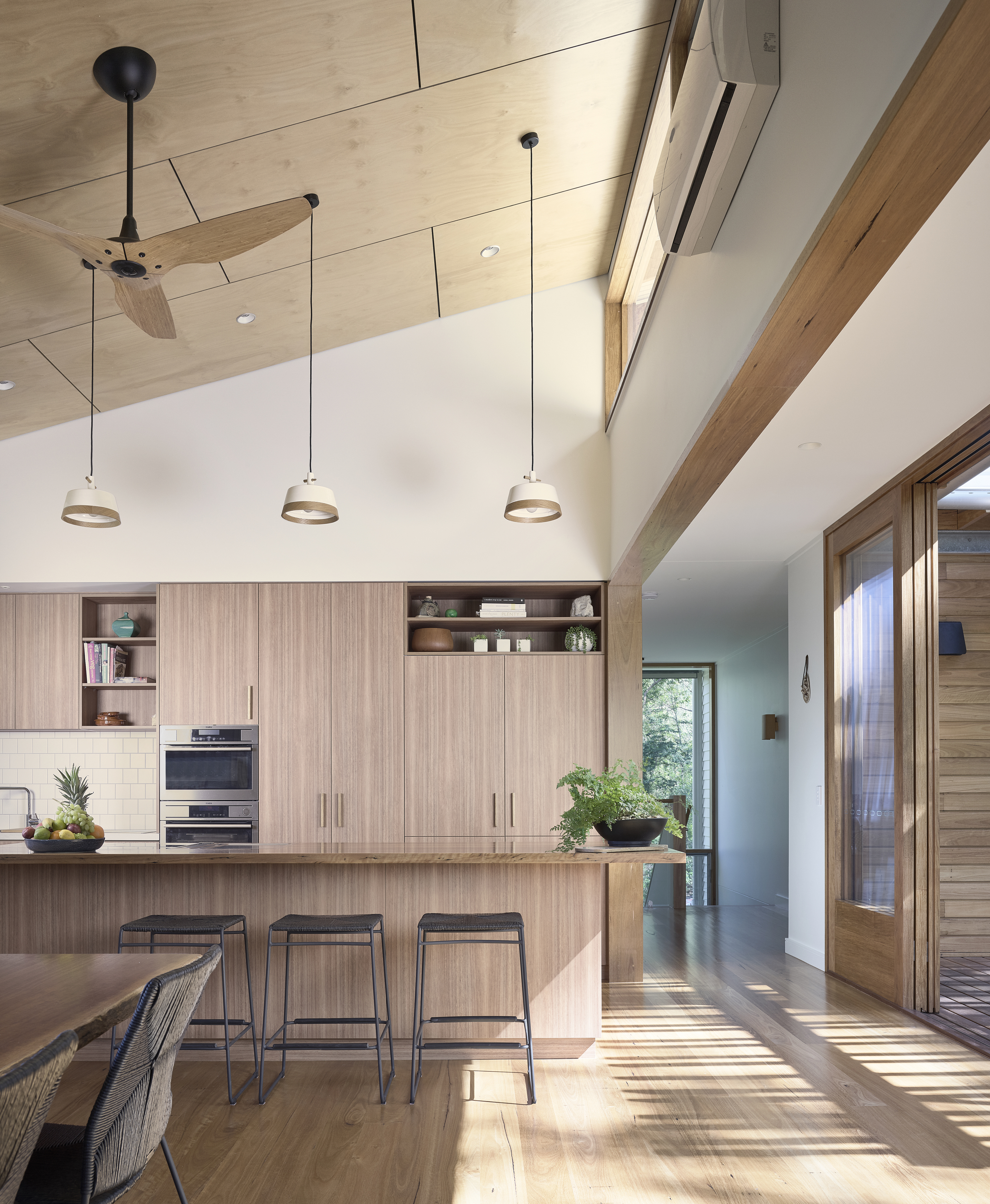
The L-shaped house is designed to harness the prevailing breeze and winter solar gain. The north-south wing accommodates bedrooms and bathrooms and has a close-up view of the surrounding bush. The east-wing wing is long, slender platform with living, dining and kitchen, and has the sense of floating over the land. South-facing windows frame views of the valley, and the narrow width allows light penetration and cross ventilation. Mimicking the slope of the site, the pitched roof rises to the north with high louvres to purge hot air, and eaves to protect the interior against summer heat, while allowing winter sun in. “The incorporation of well-considered passive design principles tailormade to the site means that air-conditioning is rarely required,” Matt says.
Read the full story here.